Tuesday, April 17, 2012

Women doing their bit

Is it me or is everything becoming expensive these days?  I went to buy some wool today and after adding up how much it would cost me to make a jumper I realised that it would be 3 times more expensive than if I just bought one ready made.  What has happened?  I remember the days when it was cheaper to make something than to buy it, now I guess it is more about the act of making something than about saving money.  I found it rather fitting when I came across an article this morning in the Herald Sun about how women are stepping up and doing whatever they can to increase their household income.

I could relate to this article, with 3 children in school and a never ending stream of bills in the mailbox each day, I have found myself doing just that.  Like the tens of thousands of other women out there heading back to work, taking on second jobs and selling things online, I have found myself working longer hours and making items to sell in an attempt to stave off the ever increasing cost of living.  According to the ING Direct Financial Wellbeing Index, only 42% of Victorians experienced an increase in their incomes (which was the lowest percentage in Australia).  This, coupled with the higher cost of living has resulted in women looking at different ways to supplement their income.  As an independent, hard working women I found it encouraging to read an article written by male journalist, Neil Keene, which acknowledged that women had a lot to offer and were stepping up to regain control of their household debt. 

My thoughts now turn to beading and how I have over the years managed to earn enough money through my creations to supplement our household income and keep debt at bay.  I am constantly looking at new ways to create ‘masterpieces’ – which is why I have started up this blog, to inspire others like me.  Beading can be a fairly inexpensive way to make items to sell, all you need is the desire and inspiration.  If you, like me, are looking at ways to supplement your household income I would encourage you to start taking your beading seriously.  In Africa, generations of women have been keeping their families afloat from the income they earn selling their beadwork.  Perhaps we can learn from them.

Wednesday, April 4, 2012

Why read my blog?

If you are like me, and look for meaning in the things you create then you have come to the right place to find inspiration.  Beading is not just about making pretty things out of beads; beads have a diverse history and have played an important role in communication, representation and creativity for many different cultures.  When I create a piece of work that has meaning behind it, then that piece becomes more valuable and special.  This blog will begin by look at the role beading has played in the Zulu culture; what the colours mean and the significance of the triangle.  My aim is to inspire you to incorporate elements from other cultures (in this case the Zulu culture) into your designs.

Zulu beadwork
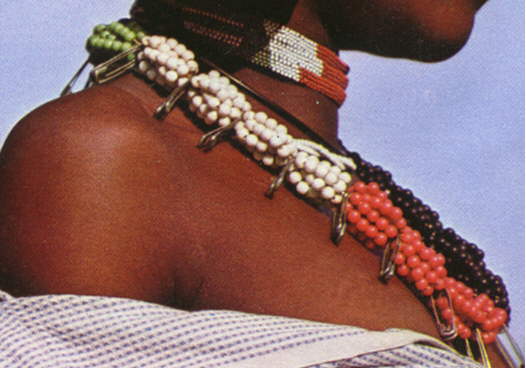
Beads are an important part of the Zulu culture in South Africa, everything is adorned with beads.  The most important role that beads play, however, is in courtship.  If a young man is successful in winning the admiration of the girl he has his eye on, she will make a beaded necklace for him and a matching beaded necklace for herself to wear.  Traditionally, these necklaces carried messages to their love one, they were love letters made out of beads. 

Beads are also worn by females:

·         to distinguish them from their older sister/s;
·         to show that they are engaged (much like we wear an engagement ring)
·         when they are getting married; or
·         when they have become a new mother.


One can see here the significance beads play in the Zulu culture.

Colour Interpretation
Colours mean different things according to the colours positioned next to them. Pearl Blay explains in her blog post African Beadwork: The Romance of Zulu Beads, how this works.  Below is a chart showing the colours they use and their meaning:


The Significance of the Triangle
The most significant shape used in Zulu beadwork is the triangle.  The three corners represent the father, mother and child.  If a triangle is pointing down it means that the woman wearing it is not married, if it is pointing up it stands for an unmarried man.  If two triangles have been positioned together at the base of the triangles then this means the woman is married, if the two pointed parts are joined then this means the man is married.

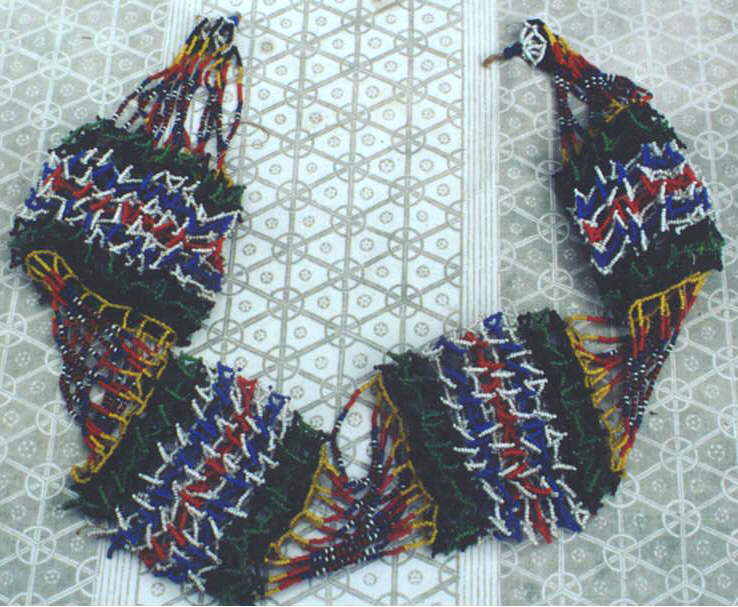
The Zulu Beadwork Necklace Collection shows the different kinds of necklaces that are still made to this day, my favourite is the Umgexo_wamaqanda.  


I highly recommend exploring some of these necklace designs and start thinking about how you can incorporate them in to your next piece.

Friday, March 23, 2012

Why I love beading...


As I sit here writing this blog I can’t help but think back to the beginning of my life and my early memories of my childhood.  I grew up in a small rural town in KwaZulu Natal which was rich in African culture and tradition.  We had a Zulu nanny called Annie whom I loved very much, I used to spend all my time with her and over years she imparted some of the wisdom of her culture on to me.  
Annie lived in a little flat at the back of our house called a Kaya and I spent many days with her in her room where she would tell me stories and cook me samp and beans (traditional African food).  Now looking back on that time in my life, one of my most vivid memories was when I was about 7 years old sitting on the floor in Annie’s Kaya.  She pulled out a wooden box from under her bed and opened it carefully.  I recall her eyes being filled with emotion and I knew even at that tender age that this was something very important to her.  She pulled out a package which was wrapped in newspaper and tied with a white ribbon and I watched as she carefully unwrapped it.  Inside was the most beautiful beaded necklace I had ever laid eyes on.  Annie carefully placed the precious necklace on the mat we were sitting on and began telling me her story. 
She told me she wore this necklace on her wedding day, it had taken her 9 months to make and each bead represented the love she felt for her husband; she had written him a poem out of beads.  She had known from the moment she saw him that she had found her indoda (husband) and the day they married was the best day of her life.  She recalled every moment and tears welled up in her eyes.  I asked her, “why are you sad umngane (my friend)?”  She told me she was sad because she missed her husband, he died shortly after they were married and although it was a long time ago now, he was always in her heart.  She carried this necklace with her wherever she went to remind her of the love she once had.
The necklace Annie made was called an Isihlahla and is usually dismantled after the wedding however Annie never allowed that to happen, perhaps she knew deep inside how important it would become to her.  This was my first introduction to beadwork and is where my love for beading began. 


Annie, my mum, brother and me
(this image is under full copyright)